Study visit on graduate tracking system in Slovakia
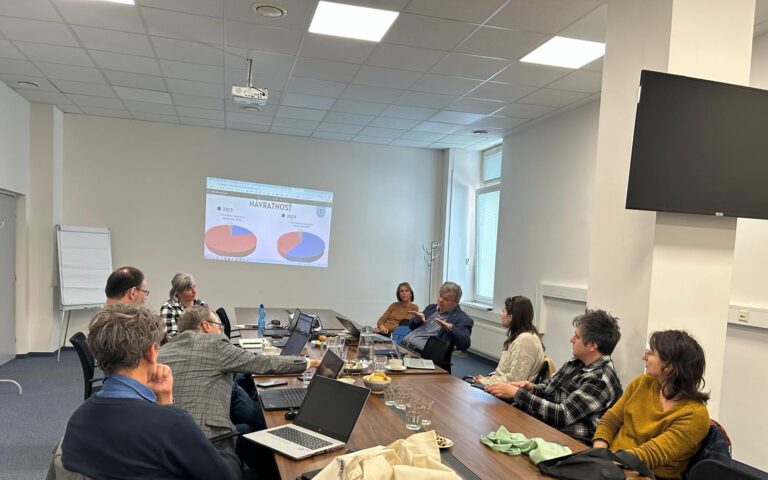
A two-day study visit took place in Bratislava, focusing on the Slovak model of graduate tracking, which drew strong interest from our Hungarian colleagues.
The first day was devoted to an in-depth discussion about the three-pillar graduate tracking system in Slovakia:
The first pillar is based on administrative data from various state registers, such as the unemployment register or the social security register.
The second pillar of graduate tracking represents the collection of qualitative data through nationwide surveys. It is a standardized questionnaire distributed to all graduates approximately 15 months after graduation, aimed at gathering their opinions on the quality of education received and their employment situation.
The third pillar is implemented through individualized school questionnaires. This additional level of tracking allows schools to tailor their surveys to their own needs – for example, to gather feedback on specific skills covered in their school-based curricula and to analyse these results in greater detail than in the second pillar. The second and third pillars thus rely on electronic questionnaires sent to graduates by schools, complementing the administrative data collected under the first pillar.
During the discussions, the participants were introduced to how the first pillar merges data from different state registers to provide comprehensive information about graduates’ labour market status, international mobility, salaries, and other outcomes. It was also demonstrated how these data are used for secondary analyses — for instance, in spending reviews carried out by the Value for Money Office, in assessing wage premia for graduates returning from studies abroad, and in evaluating the effectiveness of dual VET. Representatives from the Ministry of Education, Research, Development and Youth of the Slovak Republic also took part in this first day’s session.
The second day focused on how to integrate graduate tracking into institutional quality assurance processes. The participants attended a presentation on the role of alumni in sustaining graduate tracking and supporting school development. In this context, we also presented the first results from schools cooperating with us within the ongoing project. With our support, these schools have achieved higher response rates to graduate questionnaires and, more importantly, have started to approach the topic in a more systematic and sustainable way.
The discussions also covered practical aspects, such as designing effective questionnaire questions and involving students in feedback processes. This approach helps promote a bottom-up system, ensuring that the topic of graduate tracking spreads organically through the target groups themselves.
The visit contributed to mutual learning within the EQAVET community and strengthened cooperation between Slovakia and Hungary in supporting evidence-based quality assurance in VET.
Funded by the European Union. Views and opinions expressed are however those of the author(s) only and do not necessarily reflect those of the European Union or the European Education and Culture Executive Agency (EACEA). Neither the European Union nor EACEA can be held responsible for them.